


Office design: the key ingredient of a strong employer brand
— Workspace design holds more brand power than most dare to admit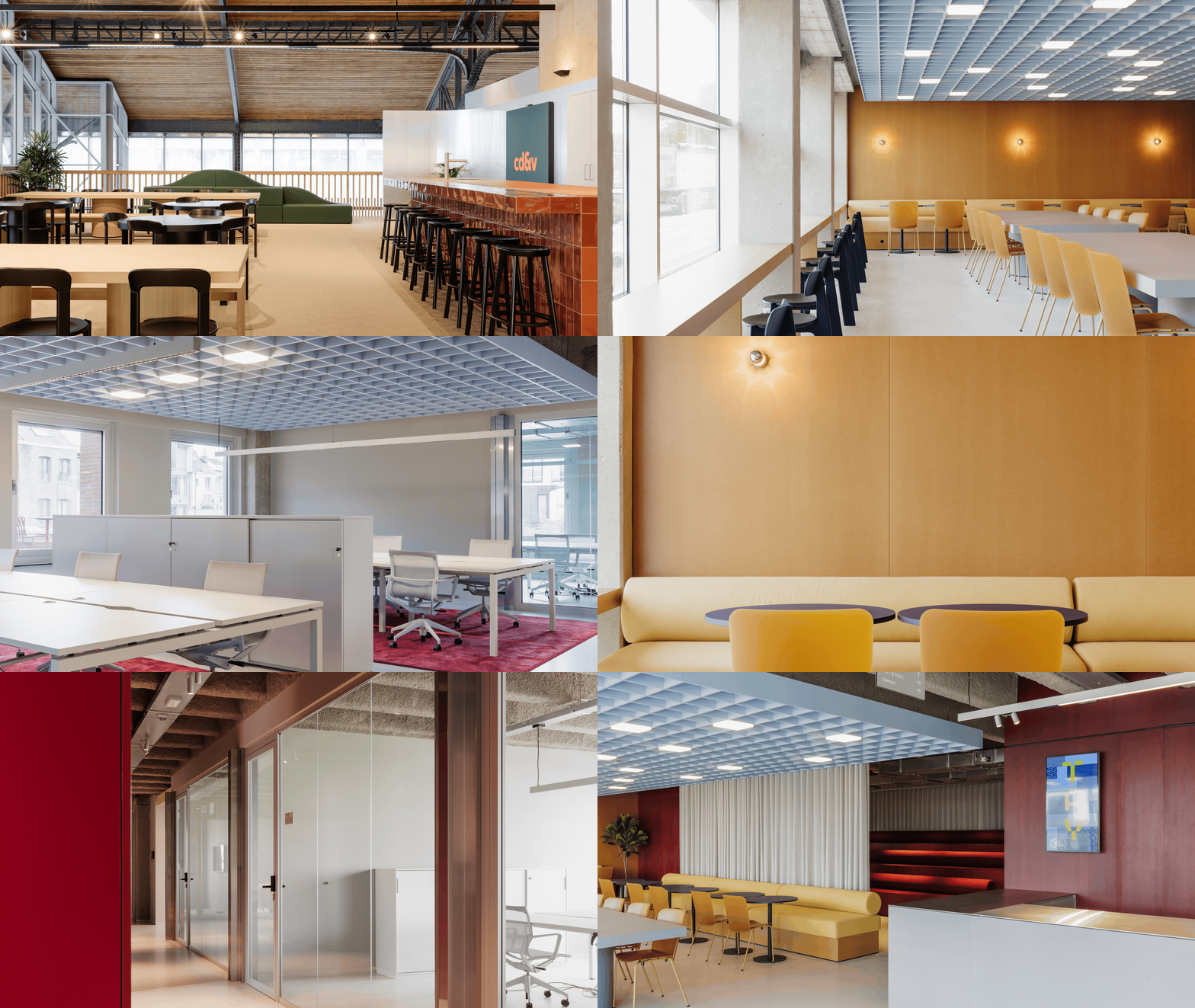
Employer branding is often understood as messaging: values, career pages, culture decks… But long before a (potential) employee reads the carefully crafted manifesto, they experience something far more immediate: they enter a space. Offices are never neutral rooms with desks. They communicate hierarchy, ambition, openness, discipline, and creativity, often more honestly than any internal communication ever could. Workplace design, then, reflects identity and shapes behaviour.
From function to emotion
The role of the office has been evolving for decades, with a major turning point in 2020 proving that remote and hybrid work is possible at scale. Even as many companies now pivot back from hybrid policies, employee expectations have shifted irreversibly. In a hybrid world, people no longer come in because they have to, but because being there adds something: connection, comfort, enablement, culture.
The unspoken question behind an on-brand office is: "Does this place represent who we are and why we work here?" This is where space becomes identity.
Modern workplaces should be designed for meaning. Just as in brand-building, every spatial choice sends a signal. Open spaces can reflect trust and autonomy. Material choices say volumes about values and longevity. Opportunities to work in silence can signal how focus and wellbeing are respected. Employees read these signals instinctively, so when space contradicts stated values, credibility gets questioned.
"We are collaborative," claims the company. Yet there are no shared spaces.
"We value wellbeing." Yet there are no quiet zones.
"We are flat-structured." Yet leadership is spatially separated.
The data paints a sharp picture of how often good intentions fail to translate into spatial reality. According to Leesman's Focus Forward report (2025), drawn from over 539,000 post-pandemic workplace responses across 122 countries, individual focused work is the most important activity for 89% of employees. Yet only 27% of senior real estate leaders cited "enabling productivity" as a purpose for maintaining office space. Most organisations design primarily for collaboration. The reality: only 40% of employees are satisfied with the availability of quiet rooms, and just 35% are satisfied with noise levels, one of the lowest-scoring features in Leesman's entire dataset.
The gap between what organisations say they value and what the physical environment actually delivers is measurable. Seen this way, the answer isn’t less collaboration space but rather less assumption behind its design.
From strategy to space
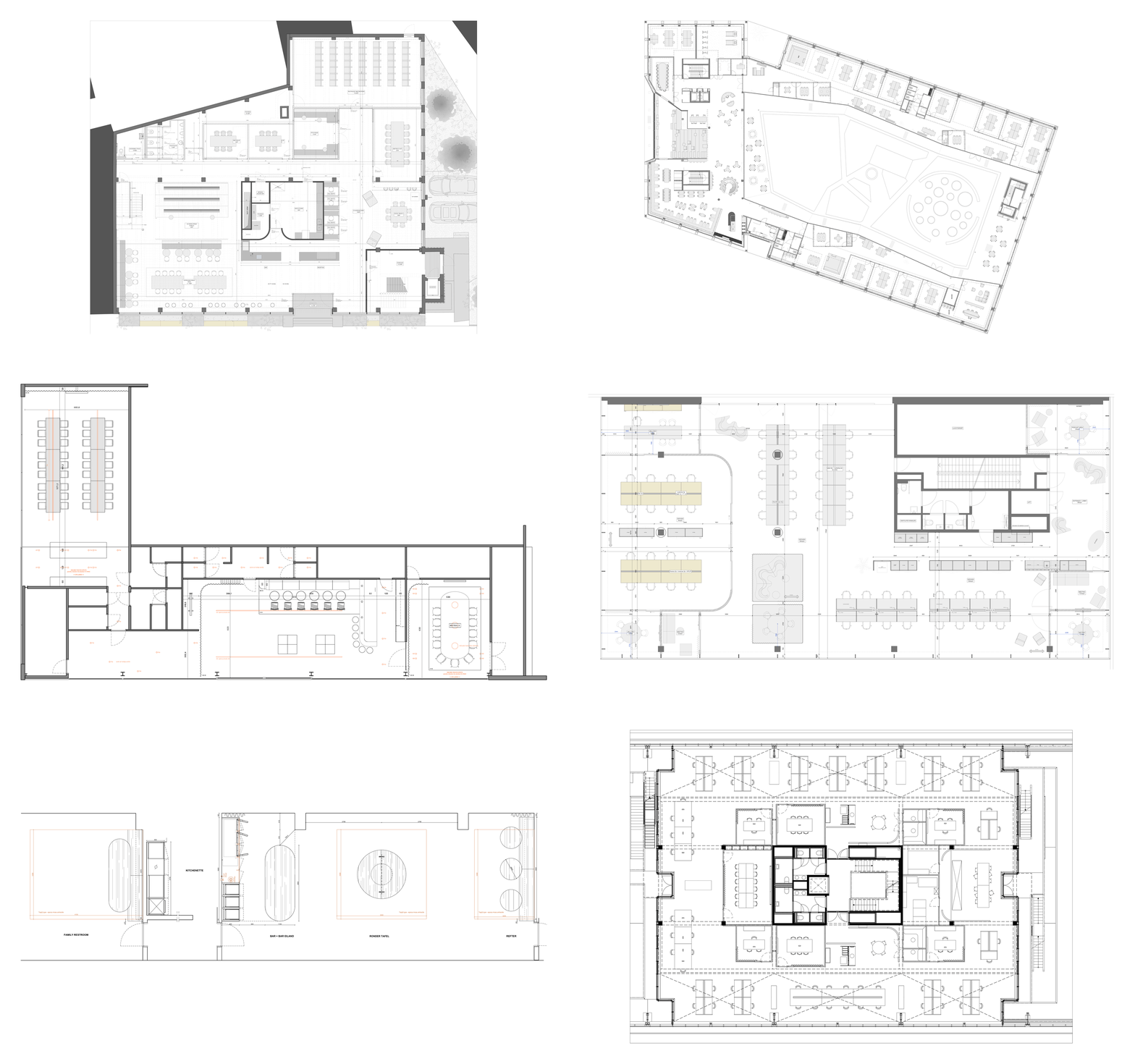
At SKINN, workplace design starts with the same principle as branding: alignment. We analyse how space can translate a company's purpose, way of working, level of ambition and relationship with its people into a physical environment. This calls for collaboration between brand strategy, leadership, HR and design teams. By identifying how people interact across an organisation, we design spaces that support and encourage those behaviours.
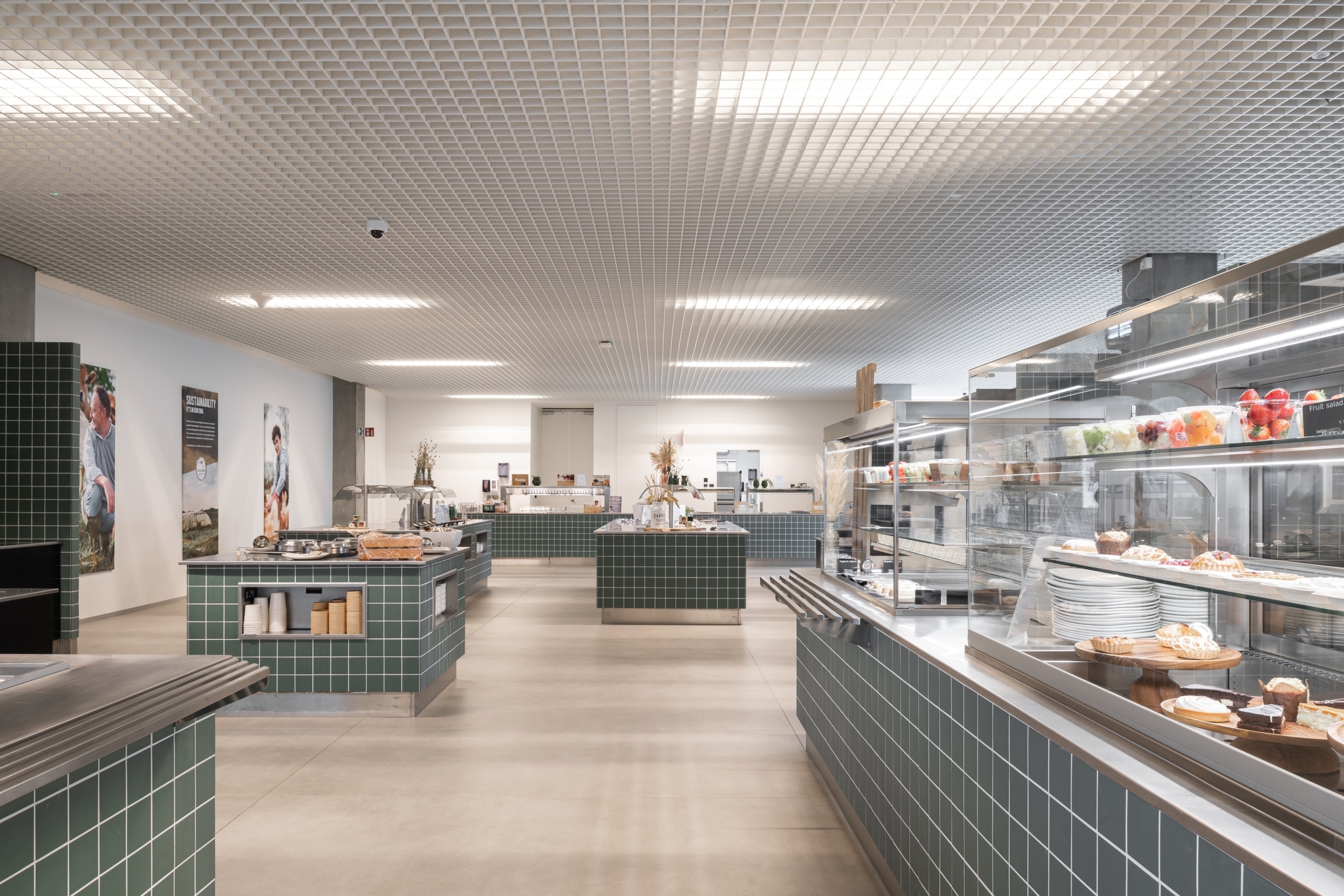
For TVH, a leading parts specialist for off-road machinery, we identified that a large organisation spread across multiple buildings risked losing the connective tissue that makes collaboration real. The response was spatial: a central hub on the ground floor where all employees can naturally come together; smaller-scale hubs on each floor for formal and informal team gatherings; and a company restaurant that serves as the social centre at lunch and a flexible meeting venue throughout the rest of the day. Community by design, not by default.
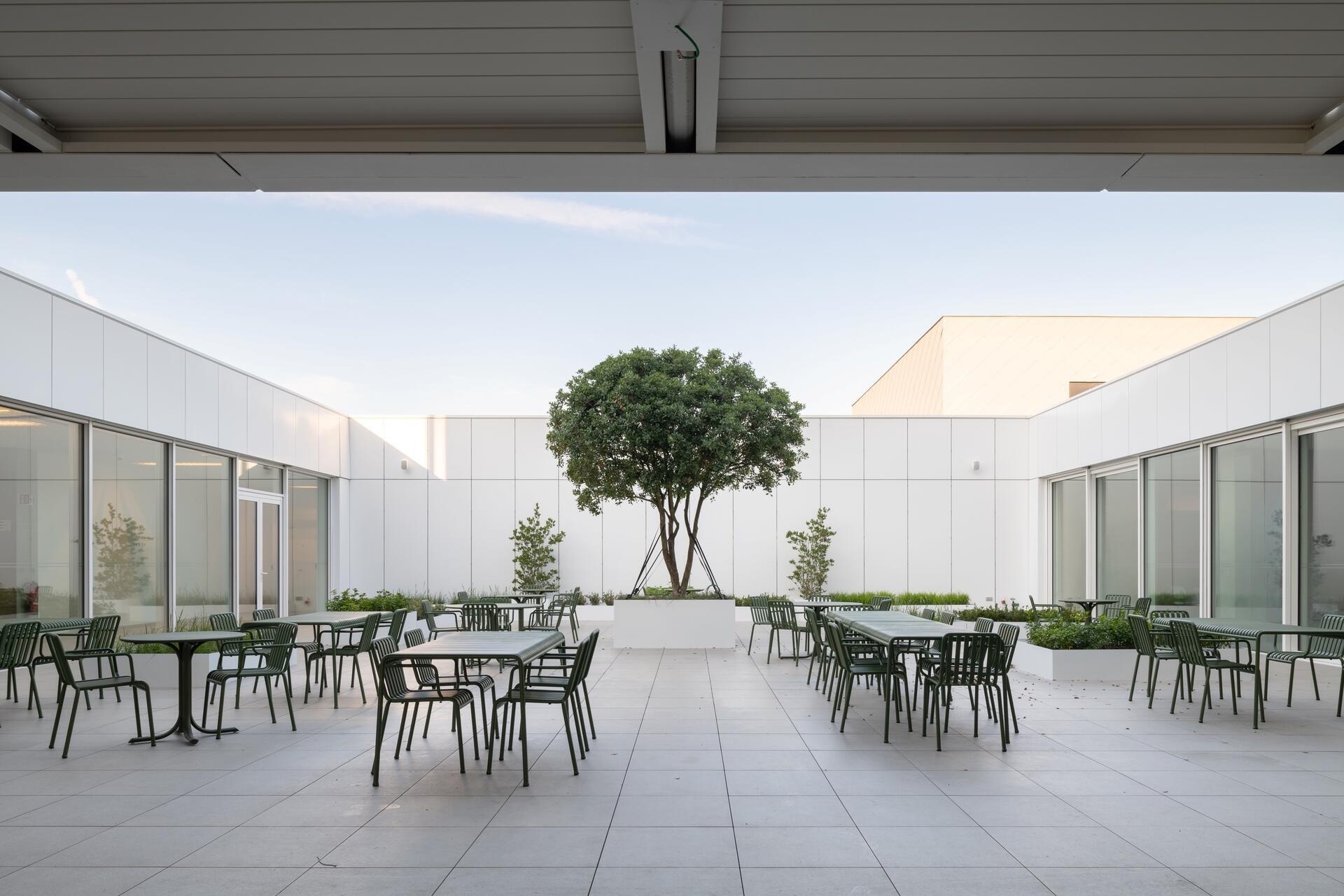


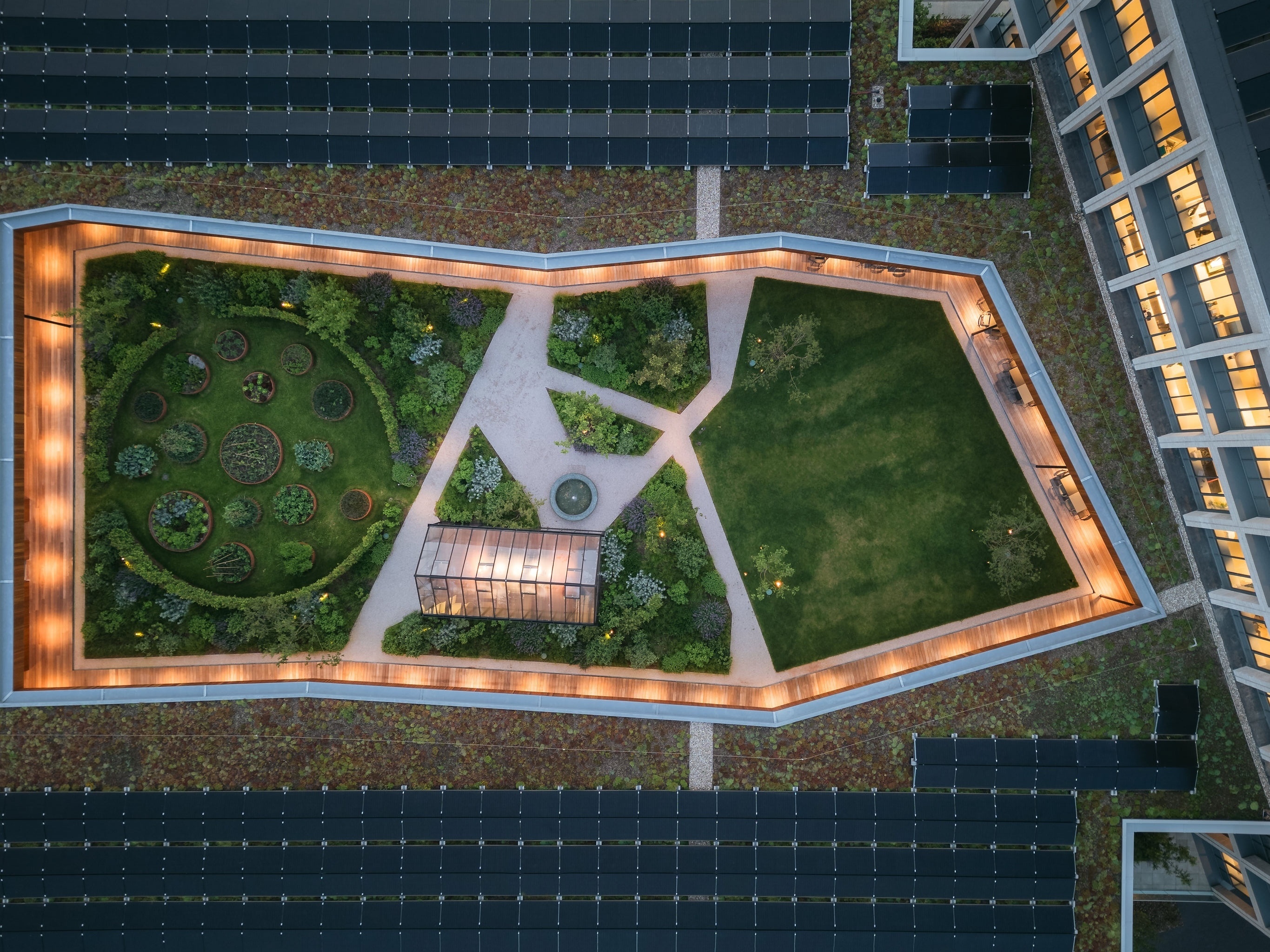
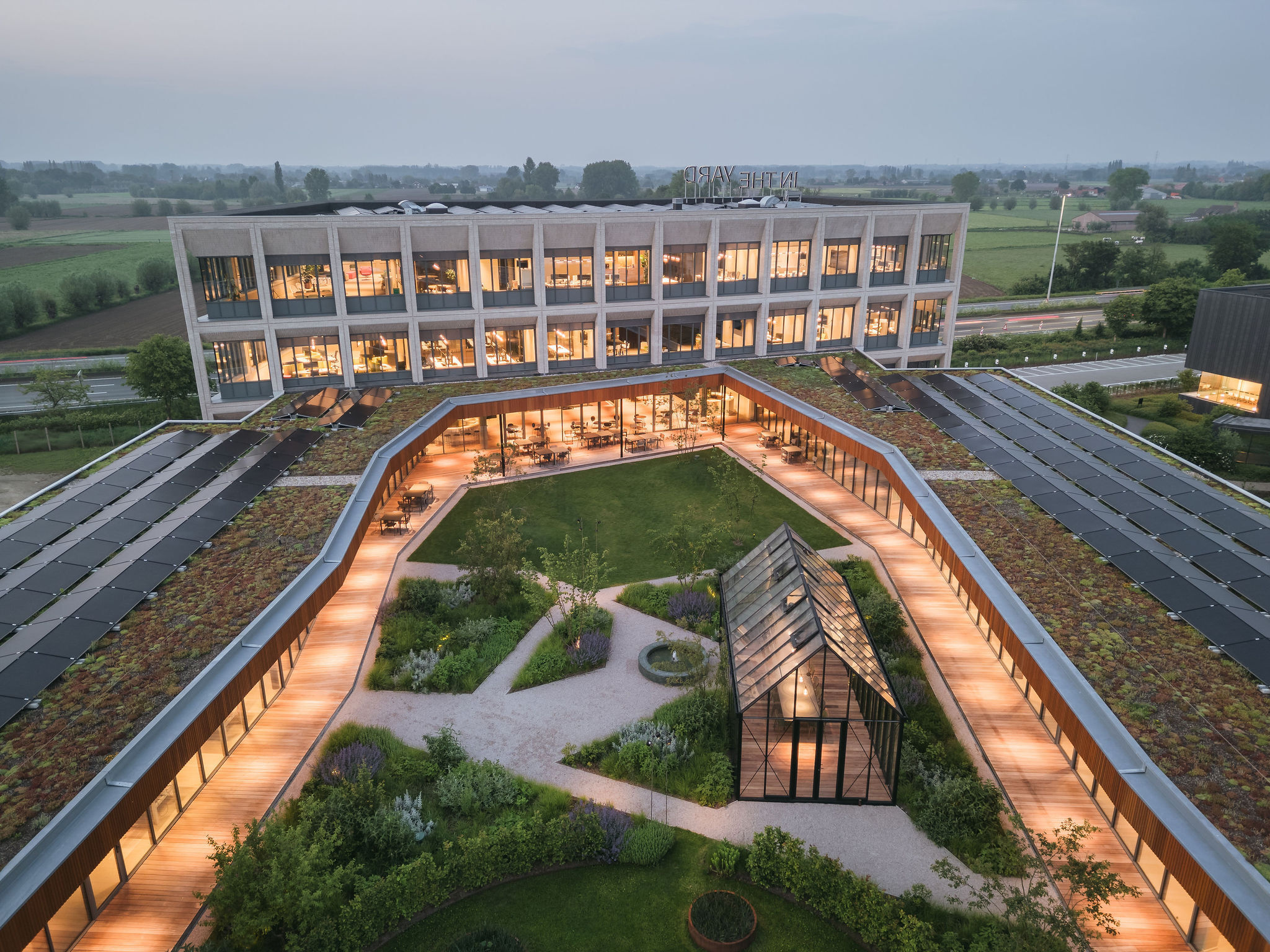
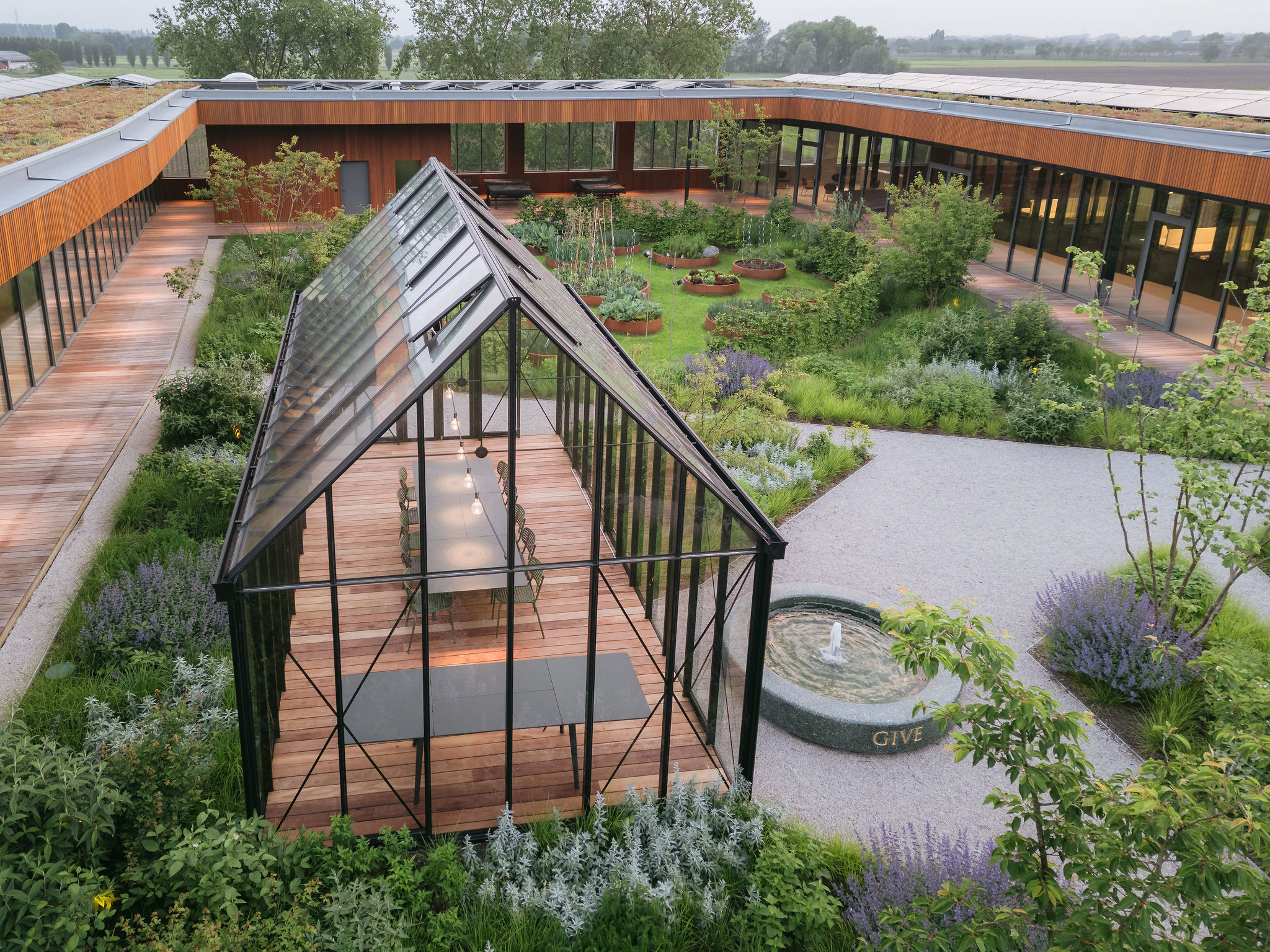
In The Yard, a business centre and event space, built its brand around wellbeing and sustainability. Our goal was to bring this promise to life through the experience of the building itself. Every visitor is guided through the reception area, positioned beside a central garden that anchors the building socially and ecologically. From there, they follow different "paths" to their destination, a deliberate spatial choice. Instead of long, straight corridors, winding routes slow the pace, invite discovery and make the journey through the space part of the experience itself.
When space is treated as an addition, it risks becoming generic. Seen as an integral part of identity, it becomes a competitive advantage.