DOX
— Brand architecture and master brand strategy. Five generations of interior design expertise, now competing across two markets.


The boundaries between learning and working are dissolving. Modern organisations increasingly demand environments that do both — spaces that foster collaboration, stimulate creativity and support the way people actually interact and grow. For companies with deep expertise in educational interior design, that shift represents either a significant opportunity or an existential threat — depending entirely on whether their brand is positioned to move with it.
DOX had been designing expert environments for the educational sector for five generations. Their proprietary methodology, their design language and their understanding of how physical space shapes human behaviour were genuinely distinctive — the product of decades of refinement across hundreds of projects. But their brand communicated sector expertise, not market authority. In a corporate workplace market increasingly crowded with interior design and workspace consultancy competitors, DOX was not being recognised as the original. They were being evaluated as one option among many.
The strategic challenge was to elevate DOX from a trusted sector name into a unified master brand that could assert its authority across both education and the corporate workspace market — without abandoning the heritage that made it credible in the first place.
We anchored the repositioning in a single, ownable idea: DOX is the original architect of human interaction. Five generations of methodology, translated into a brand vision where environments are constructed around the behaviour and needs of the people within them. That positioning gave DOX the strategic platform to enter new markets from a position of authority rather than ambition.
The brand architecture was restructured to protect and leverage what DOX had built. The proprietary content-method was elevated as a core brand asset — a scalable methodology that distinguishes DOX from competitors offering generic interior solutions. A clear distinction was drawn between holistic interior projects and iconic DOX Originals, protecting the historical design language from market imitation while giving the brand flexibility to grow.
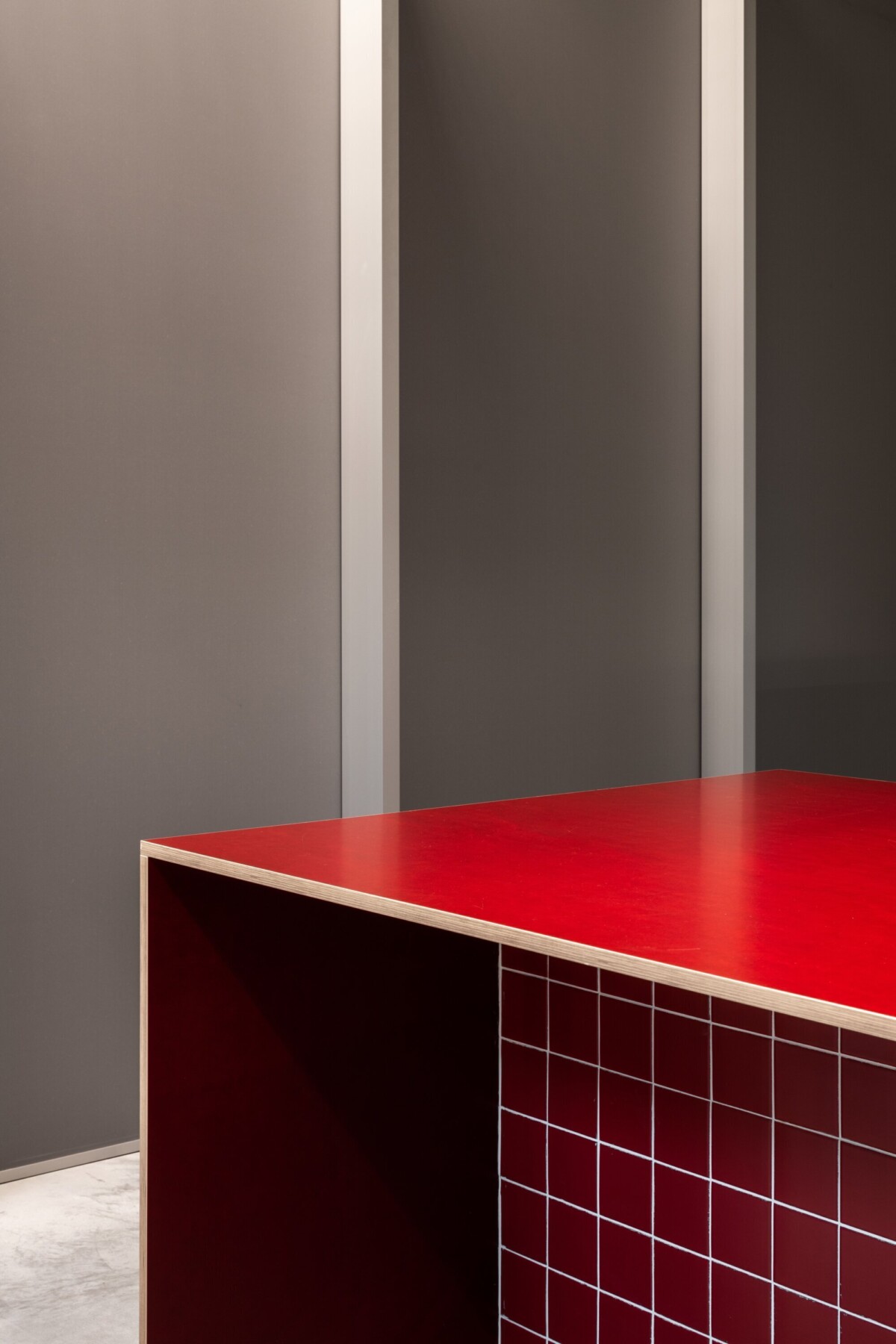
The visual identity was built to match that authority. Rooted in the organic forms and material logic of the furniture itself, the new identity creates a distinctive design language that is impossible to replicate — expressive, tactile and unmistakably DOX. Strong typography anchors the system, while motion, 3D product visualisation and brand photography give the brand the range it needs across digital and physical touchpoints.
DOX now presents itself as what it has always been — the original. A brand with the depth, the methodology and the visual confidence to be chosen by educational institutions and forward-thinking organisations alike, across Belgium and beyond.
For any heritage brand navigating a market expansion, a brand architecture challenge or a repositioning from sector specialist to market authority — in interior design, workspace consultancy or the broader built environment sector — this is what it looks like when five generations of expertise become a competitive advantage.